

· By Annemarie
Jet Lag Recovery Tips Proven Strategies to Beat Travel Fatigue
The secret to beating jet lag isn't something you figure out after you land, bleary-eyed and confused. The real work starts before you even pack your bags. If you want to win the battle against travel fatigue, you need a game plan—one that involves a little prep work to give your body a serious head start.
Your Jet Lag Strategy Starts Before You Fly
Seriously, the best way to minimize that soul-crushing jet lag is to start adjusting days before you even leave for the airport. It's all about gently nudging your body's internal clock, your circadian rhythm, a little closer to your destination's time zone. This makes the actual time jump feel way less dramatic.
And don't worry, this doesn't mean you have to make huge, disruptive changes to your life. We're talking small, easy shifts that really add up.
For example, if you're flying east, try hitting the hay 30-60 minutes earlier each night for the three days leading up to your trip. Wake up a little earlier, too. Heading west? Do the opposite. Stay up a bit later and sleep in a little longer. It's a simple trick, but it can make a world of difference.
Prepare Your Body and Your Bag
Once you’ve started tweaking your sleep schedule, the next step is packing smart. Think of your carry-on as your personal anti-jet lag toolkit, stocked with everything you need to support rest and adaptation while you're in the air and once you've landed.
A few must-haves for your bag:
- A high-quality eye mask: Blocking out that bright cabin light is your best signal to your brain that it's time to sleep, even if it's noon outside your window.
- Noise-canceling earbuds or headphones: Drowning out the engine hum and your chatty seatmate is non-negotiable if you want to create a peaceful bubble for yourself.
- Travel wellness aids: Sometimes you need a little extra help. The market for jet lag remedies is exploding for a reason—frequent flyers are desperate for things that actually work. Oral supplements are especially popular because they're just so easy to take on the go.
The best jet lag advice is always about prevention. When you prep your body and pack the right gear, you're not starting your trip from a deficit. You’re setting yourself up to adapt quickly and actually enjoy your destination from day one.
This pre-flight phase is also the perfect time to brush up on other wellness strategies for the road. For a deeper dive, check out our guide on essential travel health tips. A little effort before you go can make your trip so much more energetic and fun.
How to Master Your In-Flight Environment
Think of your time in the air as a critical window. You can either use it to get a head start on beating jet lag, or you can accidentally make it a whole lot worse. The best strategies turn your flight into a tool for adaptation, and it starts with a simple psychological trick.
As soon as you board, set your watch and phone to your destination's time. It might seem small, but this one action kicks off the mental shift your body needs to start making. From there, it's all about creating an environment that encourages rest and prepares you for the new time zone.
Hydration Is Non-Negotiable
The air inside an airplane cabin is notoriously dry—sometimes with humidity levels lower than the Sahara Desert. This environment sucks the moisture right out of you, leading to dehydration that makes jet lag symptoms like fatigue and headaches feel so much worse.
Your mission is simple: drink water constantly.
It’s just as important to know what not to drink. Skipping the in-flight alcohol and excessive caffeine is a total game-changer. That glass of wine might seem relaxing, but alcohol messes with your sleep quality and makes dehydration even worse. And caffeine? It can completely derail your sleep schedule, making it impossible to rest when you need to and adjust once you land.
This infographic breaks down the key steps to take before you even get on the plane, setting you up for success from the get-go.
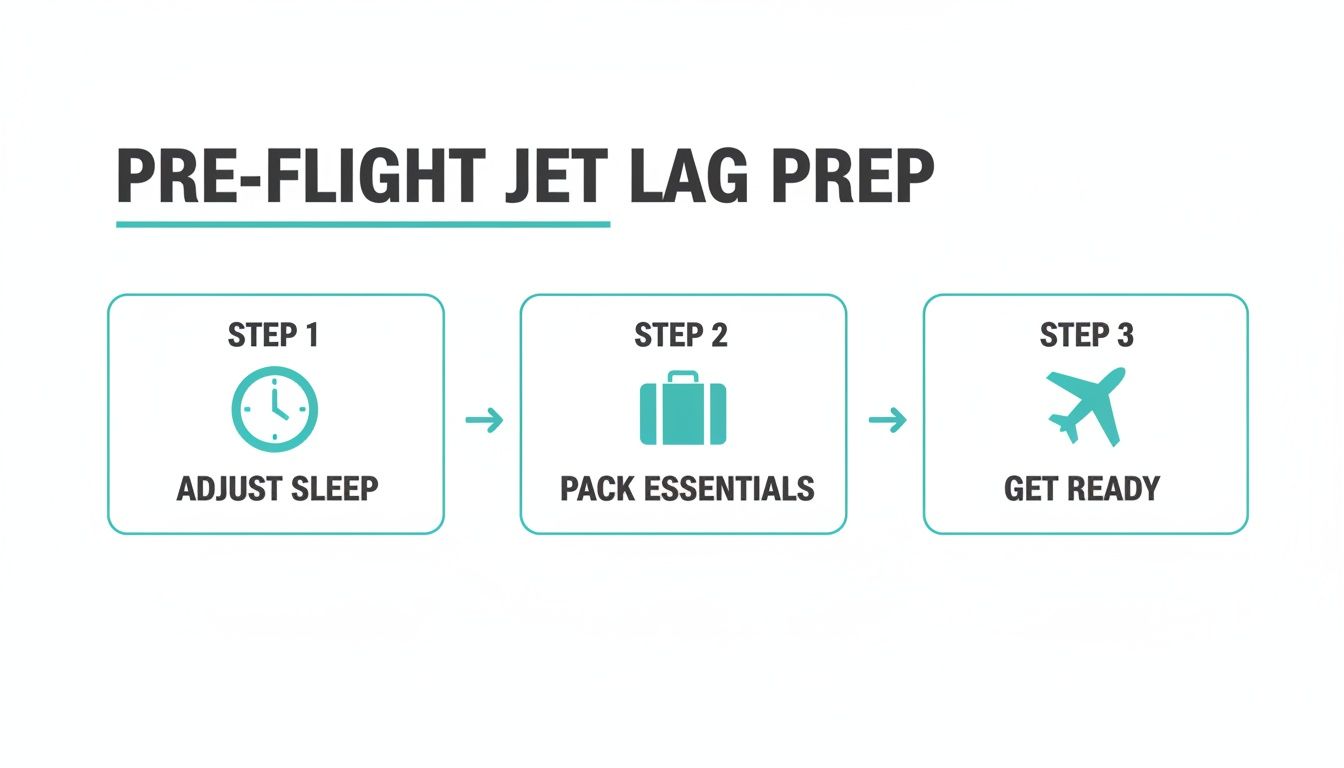
As you can see, a successful flight starts before you even leave home. Adjusting your sleep and packing smart are directly connected to how well you’ll manage your time in the air.
Time Your Sleep Strategically
Here’s a pro tip that most people miss: time your in-flight sleep based on your direction of travel. This is where you can really get ahead of the curve, but your approach has to change depending on whether you're flying east or west.
Your in-flight strategy will look a little different based on which way you're headed. Here’s a quick-glance guide to help you plan.
Eastbound vs Westbound In-Flight Plan
| Action | Eastbound Flight (Losing Time) | Westbound Flight (Gaining Time) |
|---|---|---|
| Sleep | Sleep as much as possible, especially during the first half of the flight. This gets you closer to the new, later bedtime. | Stay awake for most of the flight. Aim for a short nap in the last few hours to arrive rested but ready to stay up. |
| Light | Keep your eye mask on and window shut to block out light and encourage sleep. | Seek out light when you need to stay awake. Open the window shade or use a personal light. |
| Meals | Eat a light meal early on, then signal to your body it's "nighttime" by skipping later meals. | Eat your meals according to the new, later time zone to help your body adjust. |
| Caffeine | Avoid completely. You need to sleep, and caffeine will only disrupt that. | A coffee or tea mid-flight can help you stay awake and push through until it's time to sleep at your destination. |
By managing your sleep, light, and hydration, you're turning what would be passive travel time into an active recovery period. You’re not just flying; you're recalibrating your body clock before you even touch down.
To make the whole journey more comfortable, think about what you pack. For some ideas on what seasoned travelers always bring, check out our guide on travel essentials for long flights. The right carry-on items can make all the difference.
Mastering Your First 24 Hours on the Ground
You’ve landed, cleared customs, and finally made it. That first day is your golden opportunity to get a massive head start on beating jet lag, and your best weapon isn’t a pill or a fancy drink—it’s light.

Seriously. Your body’s internal master clock, known as your circadian rhythm, is basically run by light exposure. By getting strategic about when you soak up the sun, you can send powerful signals to your brain telling it to get with the local program.
Use Light to Your Advantage
The direction you flew makes all the difference in your light-seeking game plan. It’s a simple but critical detail that can shave days off your adjustment time.
- Traveling East (Losing Time): Your mission is to push your body clock forward. To do this, you need as much bright, natural sunlight as you can get in the morning. A brisk walk or just having your coffee outside on that first morning can work wonders.
- Traveling West (Gaining Time): Now, you need to delay your body clock. Steer clear of bright morning light and, instead, get your sunshine in the late afternoon and early evening. This helps you stay awake longer and ease into the new, later bedtime.
This targeted light exposure is the cornerstone of a quick recovery. Experts have found that for travelers crossing three or more time zones eastward, sleep can be thrown off by 60-70 minutes. But a consistent light routine can make a huge difference in how fast you bounce back.
Settle the Great Nap Debate
When that wall of fatigue hits you on the first afternoon, the urge to crawl into bed for a long nap is intense. Resist it. This is usually a trap that messes up your nighttime sleep and just drags out the jet lag.
If you absolutely have to nap, keep it short. A quick 20-minute "power nap" can be just enough to take the edge off without making you groggy or ruining your chances of sleeping later. Just be sure to set an alarm.
The rule of thumb here is simple: less is more. A short rest can be a lifesaver, but a long snooze during the day will sabotage all your hard work to adapt.
Align Your Meals with Local Time
Just like sunlight, when you eat is another powerful cue for your internal clock. Even if you don't feel particularly hungry, it’s really important to start eating on the local schedule as soon as you arrive.
Eating breakfast, lunch, and dinner at the correct local times helps hammer home the new daily rhythm for your body. It’s another message telling your internal systems that it's time to get on board. Try to avoid heavy, greasy meals that will just make you feel sluggish; stick to balanced, nutritious food to keep your energy up. For more ideas on that, check out our guide on how to wake up refreshed in our article.
Advanced Strategies for Full Recovery
Getting through that first day without face-planting into your dinner is a huge win, but let's be real—that’s just the opening act. Truly shaking off jet lag and feeling like a normal human again takes a few more days and some smarter tactics. It’s a marathon, not a sprint.
This is especially true when you've flown east. For whatever reason, that direction just messes with your body more. The instinct is to just power through the exhaustion, but that old "mind over matter" trick often just drags out the misery. The real secret is working with your body's signals, not just yelling at them to shut up.
Fine-Tuning Your Sleep with Melatonin
When you know how to use it, melatonin can be your best friend in the fight against jet lag. The problem is, most people treat it like a sleeping pill, which it isn't. The key isn't how much you take, it's timing.
Think of melatonin as the town crier for your brain, shouting, "Hey, it's getting dark, time to sleep!" By taking a tiny dose at the right moment, you're just giving your internal clock a friendly nudge in the right direction.
Here's how to get it right:
- Flying East? Take a low dose (0.5 to 3 mg) about 30 minutes before your new, earlier bedtime. This helps your body get the memo that bedtime has arrived ahead of schedule.
- Flying West? This is where it gets interesting. Instead of taking it before bed, use it if you wake up way too early, like at 4 a.m. Popping a small dose then can help you fall back asleep and stretch your rest closer to a normal local wake-up time.
Always start with the smallest dose you can find to see how you feel. You're just trying to send a gentle signal, not knock yourself out. It's also always a good idea to chat with your doctor before trying any new supplement.
Embrace Light Physical Activity
After being crammed in a metal tube for hours, your body is stressed and exhausted. The last thing it needs is a punishing, high-intensity workout. Honestly, forcing yourself to hit the hotel gym can often make things worse.
Instead, think gentle movement. A brisk walk outside in the morning is probably the single best thing you can do. You get your blood flowing and soak up that glorious, natural sunlight, which is a powerhouse for resetting your circadian rhythm. It's way more effective than trying to crush a spin class when your body is already running on fumes.
Understanding the Lag in Sleep Quality
So you've survived a couple of nights and you're feeling... okay. You might think you've beaten it, but your internal clock is probably still stuck somewhere over the Atlantic. This is where the real fight is won or lost. You might be logging enough hours of sleep, but the quality of that sleep can stay terrible for a surprisingly long time.
And this isn't just a feeling—the science backs it up. A massive study that tracked 1.5 million sleep nights found a wild gap in recovery. While the total time you spend asleep can bounce back in about two days, the more important stuff—like your sleep timing and quality—can take a whopping 15 days or more to fully get back on track, especially after flying east.
That same study found that long eastward trips cut total sleep time by an average of 61.87 minutes on the day you travel, with REM sleep taking the biggest hit. You can dig into the fascinating details in this study on sleep and travel recovery.
What does this all mean? Be patient with yourself. You need to keep up the good habits for days after you think you're back to normal. Keep prioritizing morning light, stick to a consistent sleep schedule, and stay hydrated. You have to give your body the time it needs to truly catch up.
Common Jet Lag Mistakes to Avoid
Trying to get your body on a new schedule is tricky, and it's surprisingly easy to sabotage your own recovery with a few common mistakes. Even when you have the best intentions, some habits can keep your body clock stuck in your old time zone, dragging out that awful groggy feeling for days. Honestly, knowing what not to do is just as important as all the recovery tips.
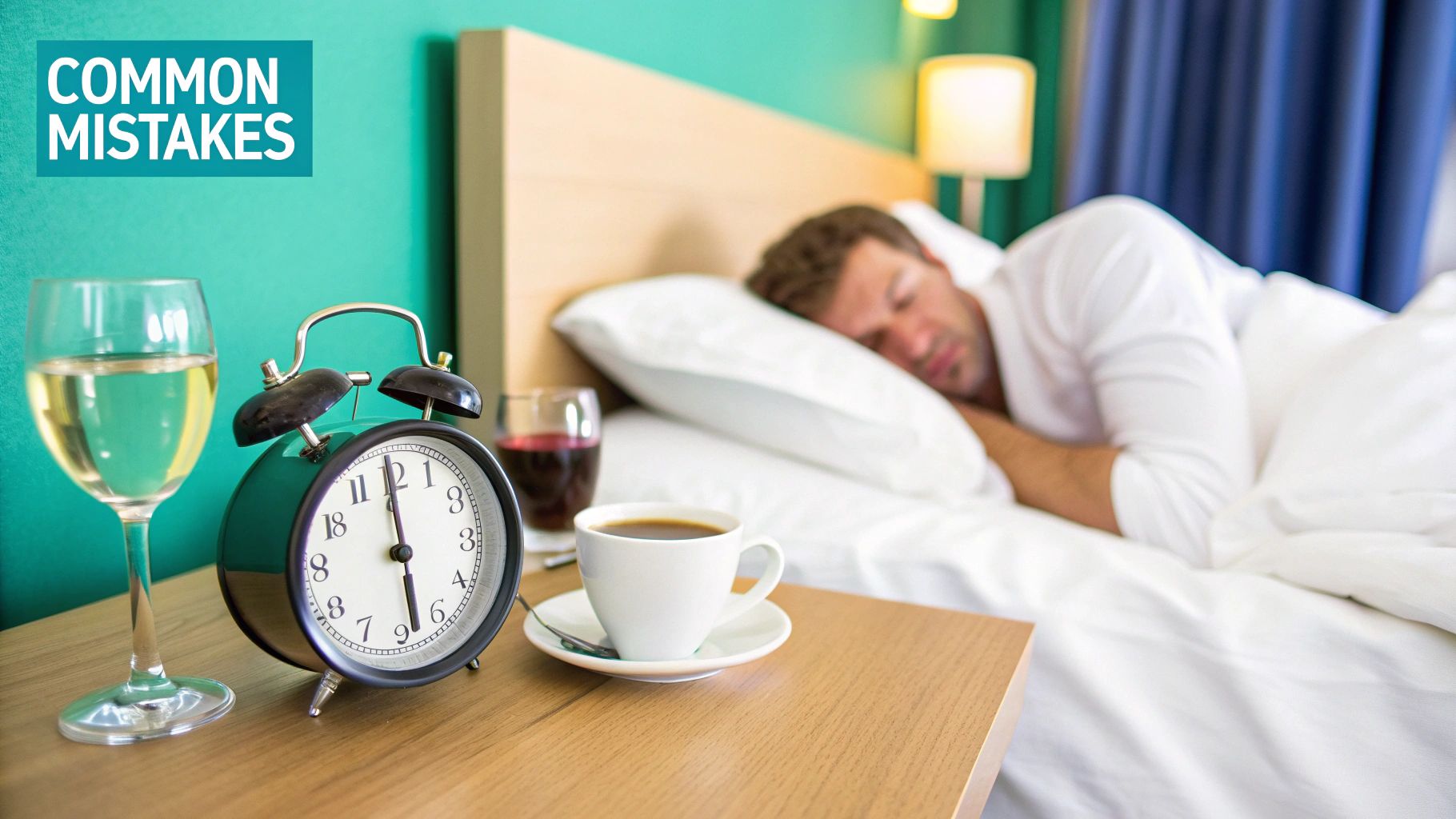
One of the biggest culprits is using alcohol as a sleep aid. That "relaxing" glass of wine on the plane or before bed might feel like it helps you doze off, but it absolutely wrecks your sleep quality. Alcohol messes with your natural sleep cycle, preventing the deep, restorative stages your body desperately needs to recover. The result? You wake up feeling even more exhausted.
Mismanaging Sleep and Naps
I get it. The urge to sleep in after a long-haul flight is almost overwhelming, but it’s one of the worst things you can do. Hitting snooze and hiding in a dark hotel room is like telling your internal clock, "Nope, we're not adjusting." You have to force yourself up and get into the daylight to send the right signals to your brain.
Long afternoon naps are another classic trap. A quick, 20-minute power nap can actually be a lifesaver, but giving in to a multi-hour snooze is a recipe for disaster. It completely ruins your ability to fall asleep at a normal hour that night, creating a vicious cycle of daytime grogginess and nighttime restlessness that just prolongs the misery.
Key Takeaway: The goal is to get all your sleep in one solid block at night, synced up with the local schedule. Chopping it up with long naps or sleeping in will only confuse your body's clock even more.
Using Caffeine as a Crutch
It’s tempting to reach for coffee all day long to fight off that bone-deep fatigue. While a morning cup can be a great tool to help you feel alert and get on the local schedule, relying on it through the afternoon is a big mistake.
Here’s where a lot of travelers go wrong:
- The Afternoon Latte: A 3 p.m. coffee might seem essential, but caffeine has a surprisingly long half-life. It can stick around in your system for hours, making it impossible to fall asleep at your new bedtime.
- No Cutoff Time: Be disciplined about this. Set a strict caffeine cutoff time—I usually go with 2 p.m. local time. This gives your body plenty of time to process it before you need to wind down.
- Forgetting to Hydrate: A lot of the time, that sluggish feeling we blame on jet lag is made so much worse by dehydration. Before you grab another coffee, try chugging a big glass of water first.
Just by sidestepping these common pitfalls, you clear the way for a much faster, smoother adjustment to your new time zone. Avoiding these simple mistakes can be the difference between feeling human in a day or two versus feeling off for most of your trip.
Your Top Jet Lag Questions, Answered
Even after mapping out the perfect plan, a few questions always pop up when you're trying to outsmart jet lag. It's totally normal. Knowing the why behind the science can make your game plan feel less like a chore and more like a secret weapon.
Let's clear up some of the most common questions travelers have about that dreaded post-flight fog. Think of it as a final pre-flight check to make sure you land on your feet, ready to go.
How Long Does It Really Take to Get Over Jet Lag?
That old rule of thumb—"one day for every time zone you cross"—is pretty outdated. Modern research paints a slightly different picture. While you might start sleeping for a normal length of time within a couple of days, getting your internal body clock and actual sleep quality back on track can take over a week. It’s often even longer when you’ve flown east.
The good news? Sticking to the strategies we've talked about, like getting sunlight at the right times and timing your meals, can seriously speed up that adjustment period. You’ll feel human again much, much faster.
Is It Better to Fly East or West to Avoid Jet Lag?
Hands down, traveling west is easier on your body. Why? Because our natural body clocks tend to run just a little bit longer than 24 hours. This means delaying our schedule by staying up later (what happens when you fly west) feels way more natural than trying to force ourselves to sleep hours earlier (the reality of flying east).
This isn't just a hunch. Studies back it up, showing that eastward travel messes with your circadian rhythm more significantly and requires a longer recovery.
Traveler's Insight: Think of it this way: staying up a few extra hours for a party feels pretty manageable. But trying to force yourself into bed at 8 p.m. when you're wide awake? That's a real struggle. That's the difference between flying west and flying east.
What About Sleeping Pills? Do They Help?
Sure, a prescription sleeping pill can knock you out, but it’s a bit of a blunt instrument. It forces sleep without actually helping to reset your internal clock. Worse, they often leave you with that groggy, hungover feeling the next day, which can make you feel even more out of sync.
They might offer a quick fix if you're desperate, but they aren't a great long-term strategy for adjusting. A better option for many is a low-dose melatonin supplement, taken at the right time. It gently signals to your brain that it's nighttime, nudging your clock in the right direction instead of hitting it with a hammer. As always, it's best to chat with your doctor before trying any new supplement.
Can Exercise Help Me Beat Jet Lag?
Absolutely, but the key is all in the timing and intensity. Light to moderate exercise—think a brisk walk in the morning sunshine—is a fantastic tool. It wakes you up, gets your circulation going, and gives you that all-important light exposure your body is craving to reset itself.
Just be careful not to go too hard, especially close to your new bedtime. A really intense workout can raise your core body temperature, which is the opposite of what your body needs to do to wind down and fall asleep.
Don't let travel fatigue or a big night out derail your plans. For those times you need an extra boost to feel your best, Upside has you covered. Our Hangover Sticks are designed with proven ingredients to help you recover quickly and live more. They are the perfect, portable companion for any traveler looking to maintain a healthy balance. Discover how to party smarter and travel better at https://enjoyupside.com.
#upside #enjoyupside #upsidejelly #livemore #hangovercure #hangoverprevention #fighthangovers #preventhangovers #HangoverRelief #MorningAfter #PartySmarter #HydrationStation #WellnessVibes #RecoverFaster #NoMoreHangovers #HealthyParty #HangoverHacks #FeelGoodMorning #NightlifeEssentials #HangoverFree #SupplementGoals #PostPartyPrep #GoodVibesOnly #HealthAndParty #HangoverHelper #UpsideToPartying